PERSONAL PROJECT / MIRAI
NOTES / THE FIRST THOUGHT
A place for the first thought.
From a loose thought to a note, a collection or a deliberate next action.

FROM ISLAND NOTES TO MIRAI
The thought arrives
before the structure.
The native project began as Island Notes: notes, reminders and a Focus of the Day close to the places where a thought appears. Mirai develops that foundation into a warmer place to capture, keep and return to an idea.
The product premise is small but demanding. A note should not need a complete filing system before it exists. Later, it still needs to be findable, editable and useful. That tension shapes the interface more than the number of features does.
The original project name and native feature history are documented in the repository. This premise is a product interpretation, not an invented personal anecdote or research finding.
- ROLE
- Product direction, UX/UI, identity and native development
- PLATFORM
- iPhone / implemented personal project
- EVIDENCE
- Physical captures, source review and portfolio reconstructions
THE THOUGHT IN USE
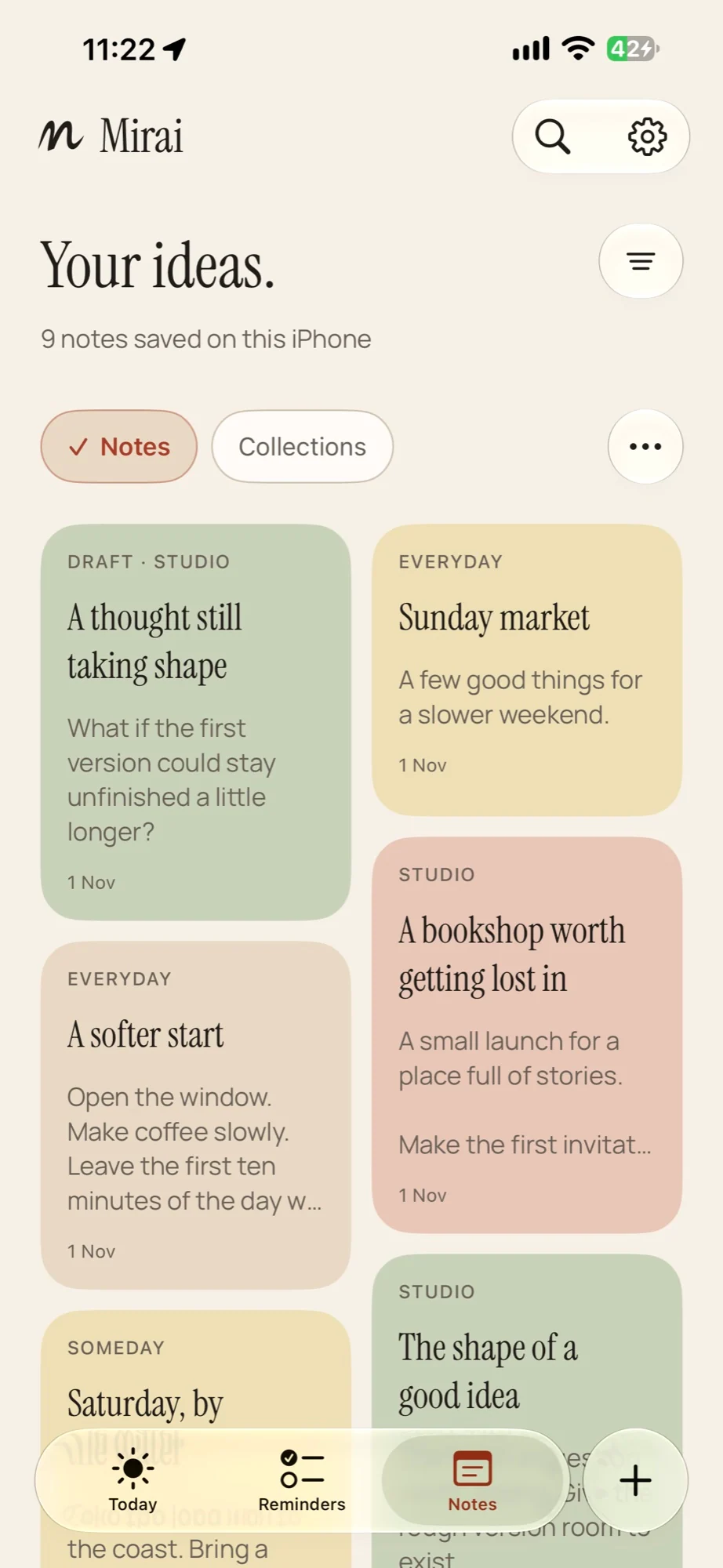
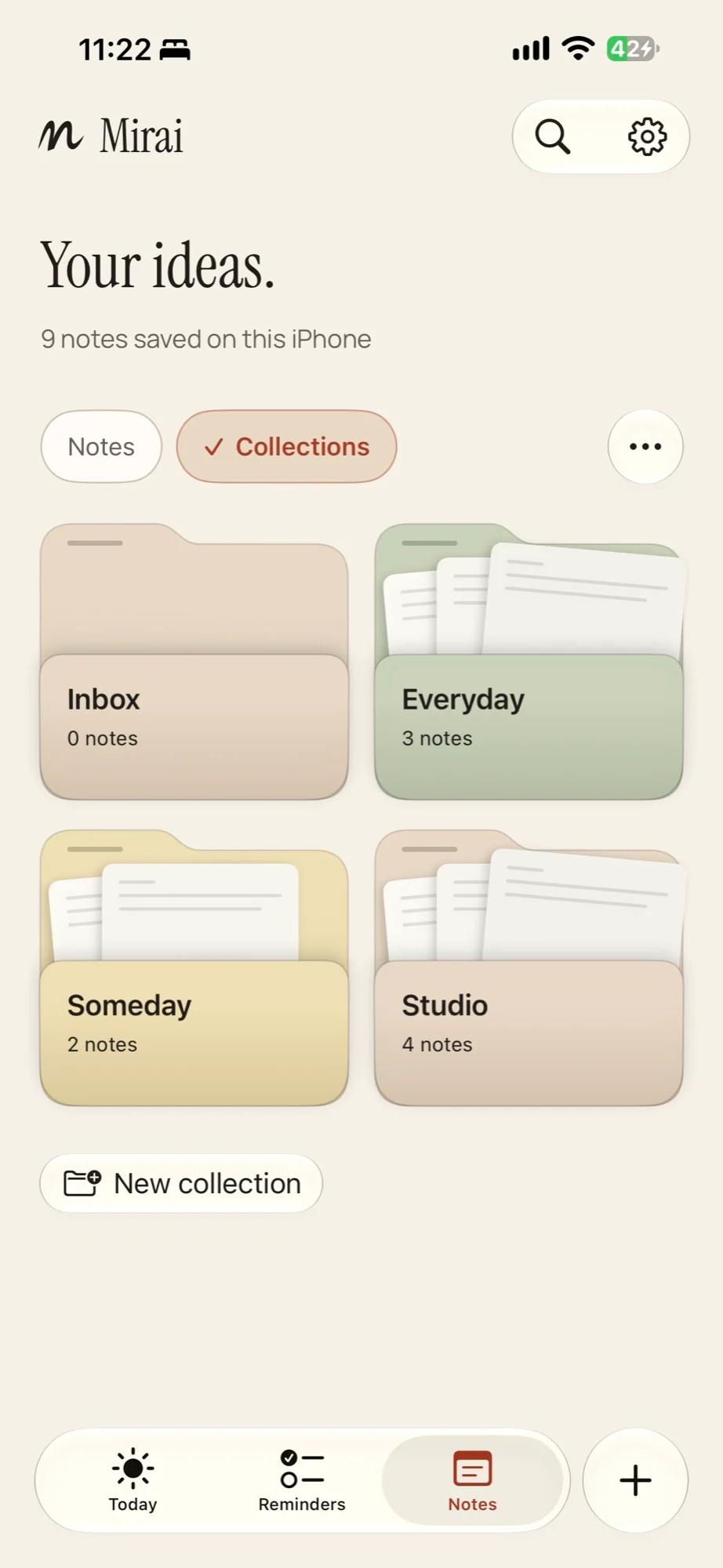
Nine notes with a reason to return.
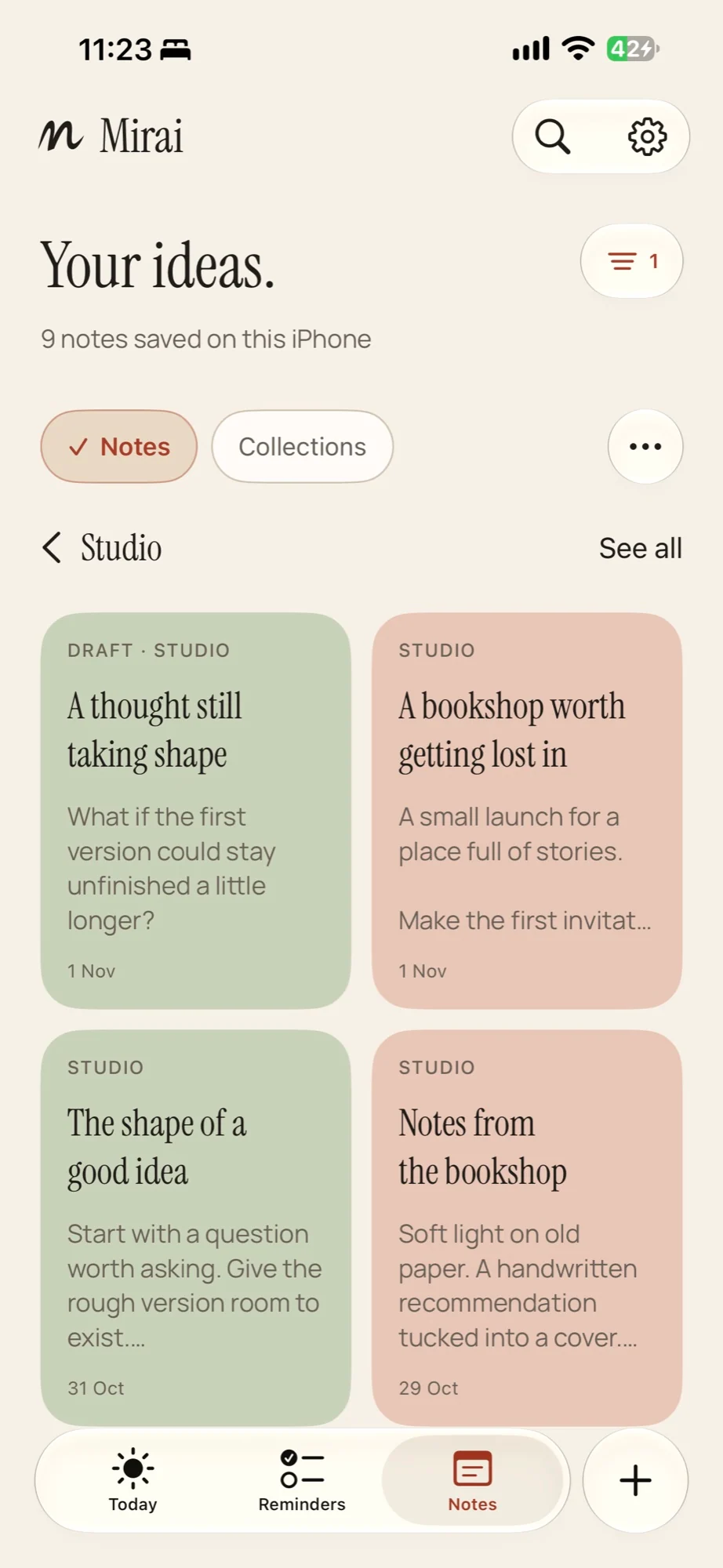
The fictional library follows one coherent creative week: bookshop references, a studio brief, a market checklist and space for an unfinished thought. Collections and search make that material recognisable later.
FIRST EXPLORATION / RECONSTRUCTED
Before it becomes a screen.
A Kindle Scribe makes a useful place for the rough relationship between capture, a note and a collection. The drawing stays deliberately primitive. A few loose boxes are enough to ask what happens to a thought after the first tap.
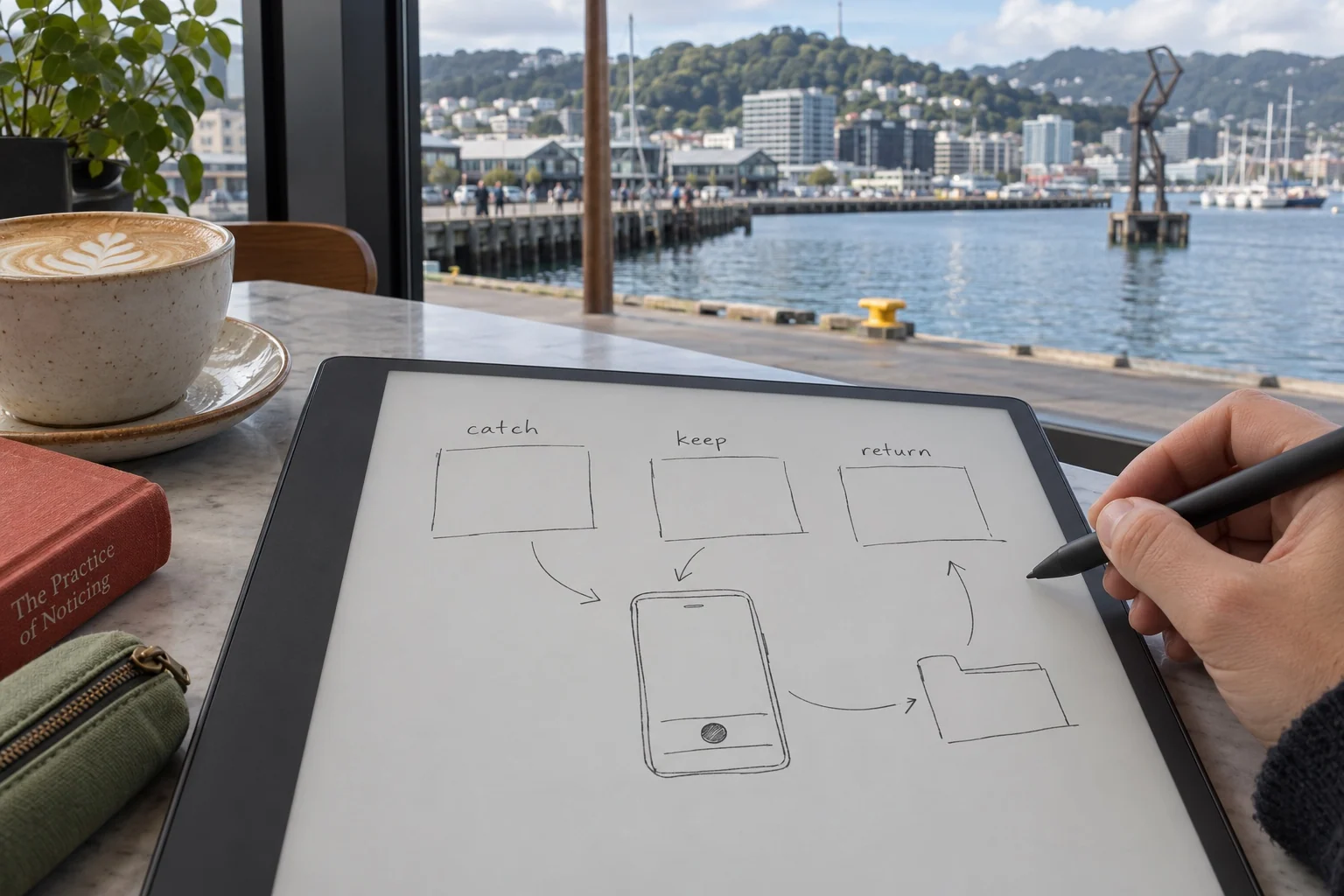
Reconstructed exploration on a Kindle Scribe, created for this portfolio. Fictional Wellington waterfront setting. The scribbles illustrate a product question and are not claimed as original historical process evidence.
THE THOUGHT IN USE
Write it. Review it. Choose what happens next.
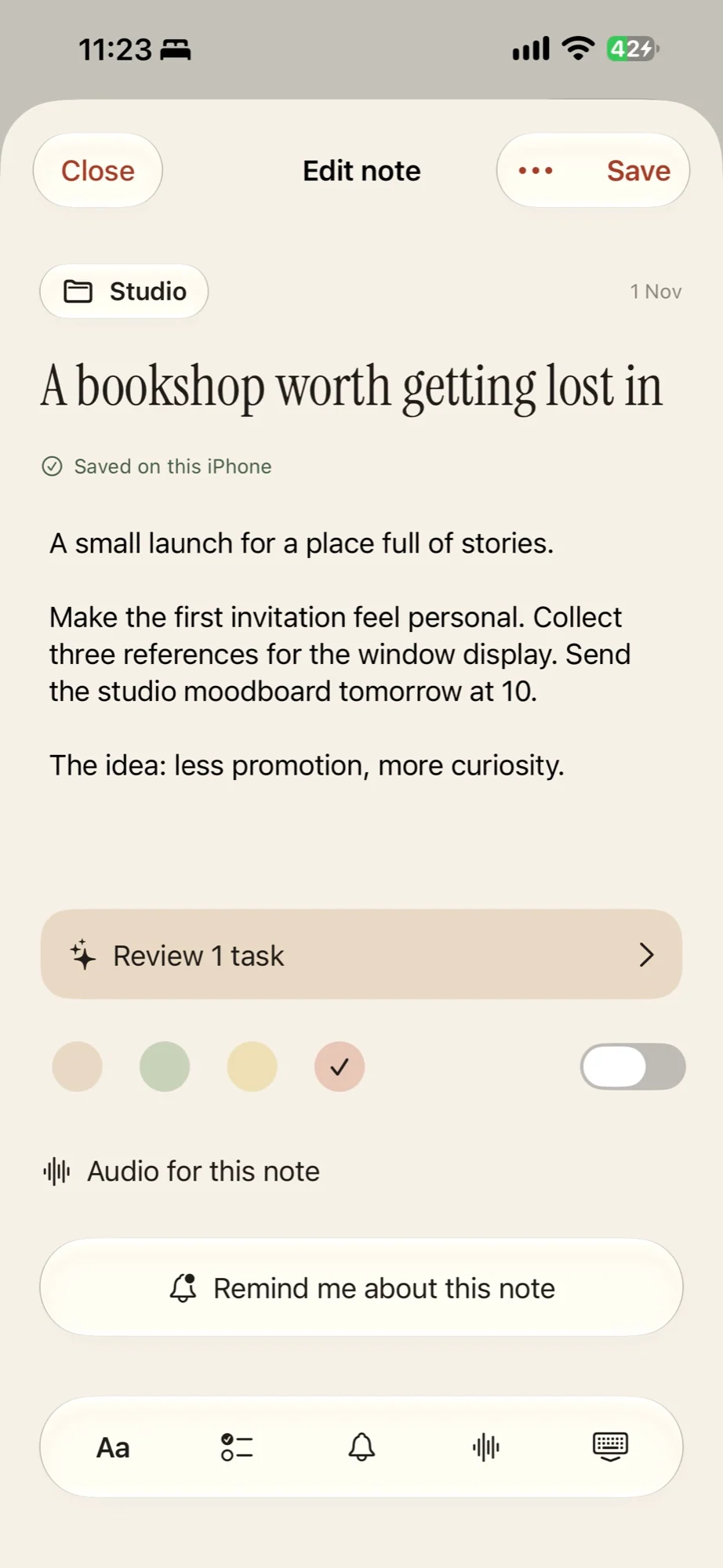
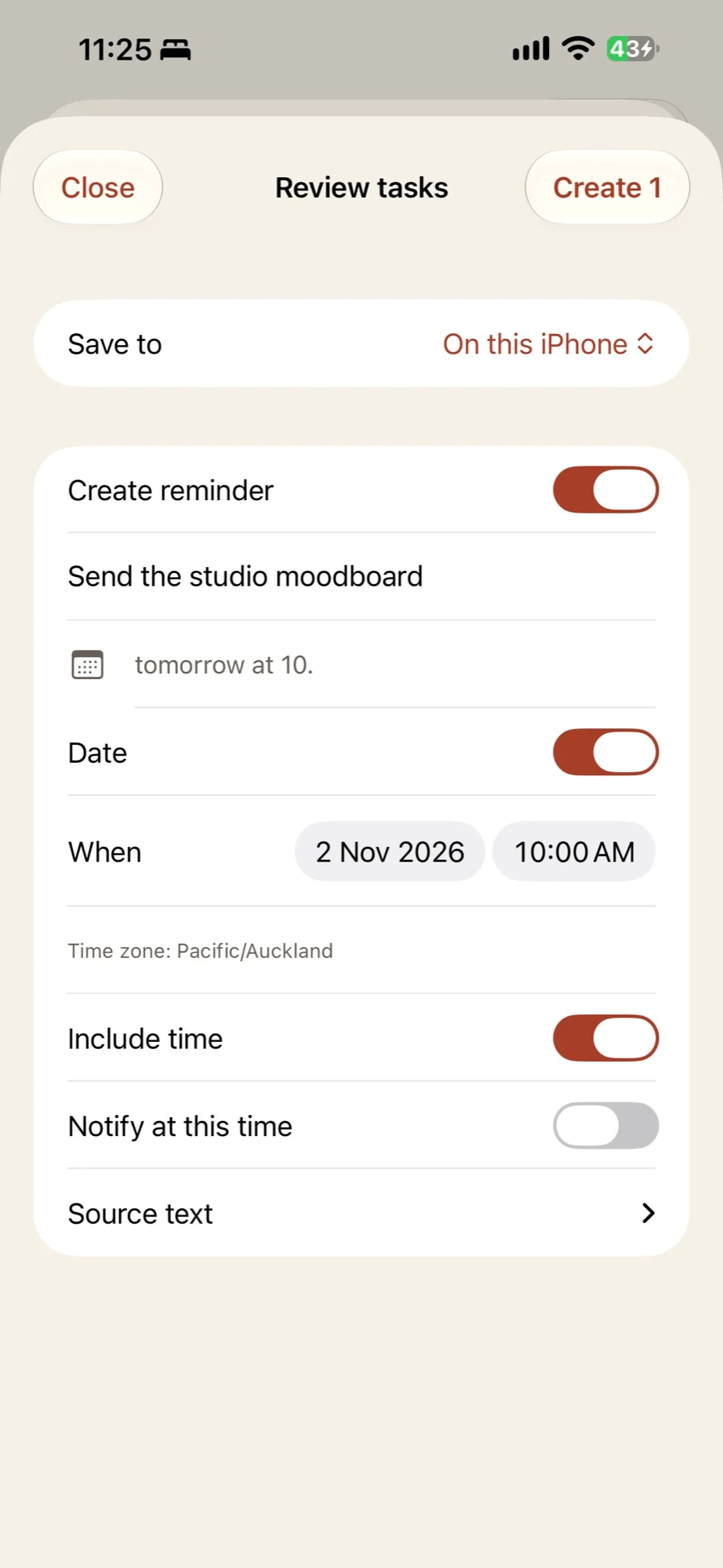
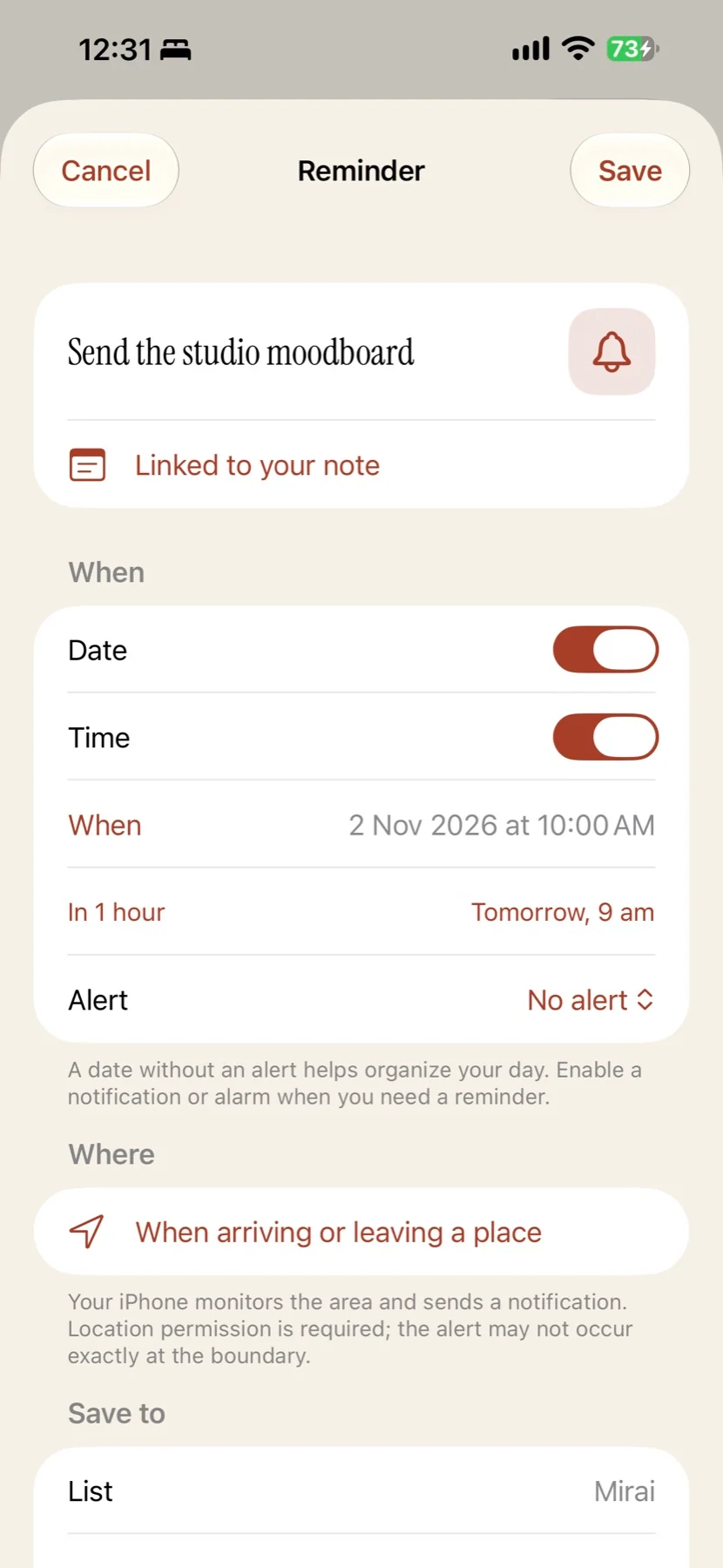
The same bookshop brief runs through all three screens. Its explicit commitment becomes an on-device task suggestion. A review step keeps the person responsible for the title, date and destination before a reminder is created.
THE THOUGHT IN USE
Time can organise without taking over.
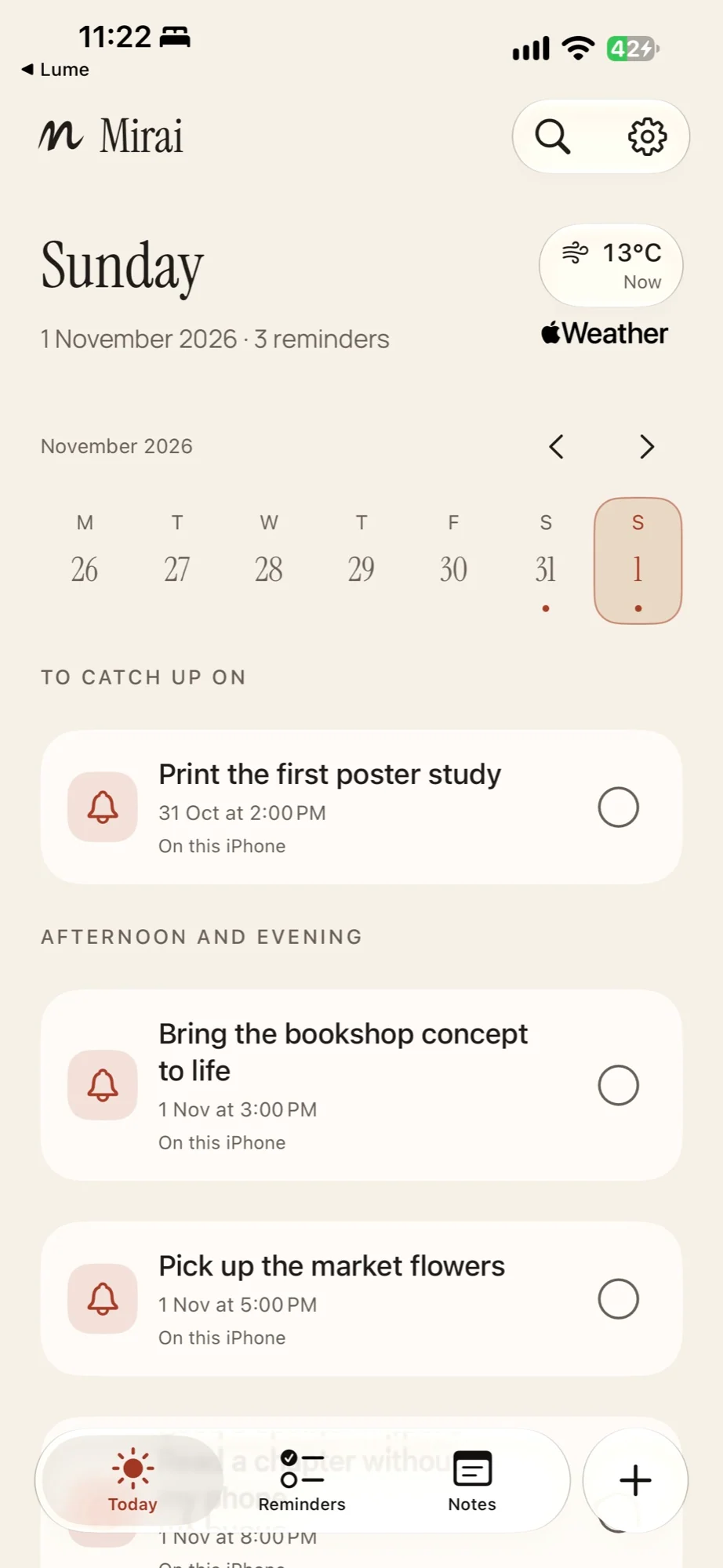
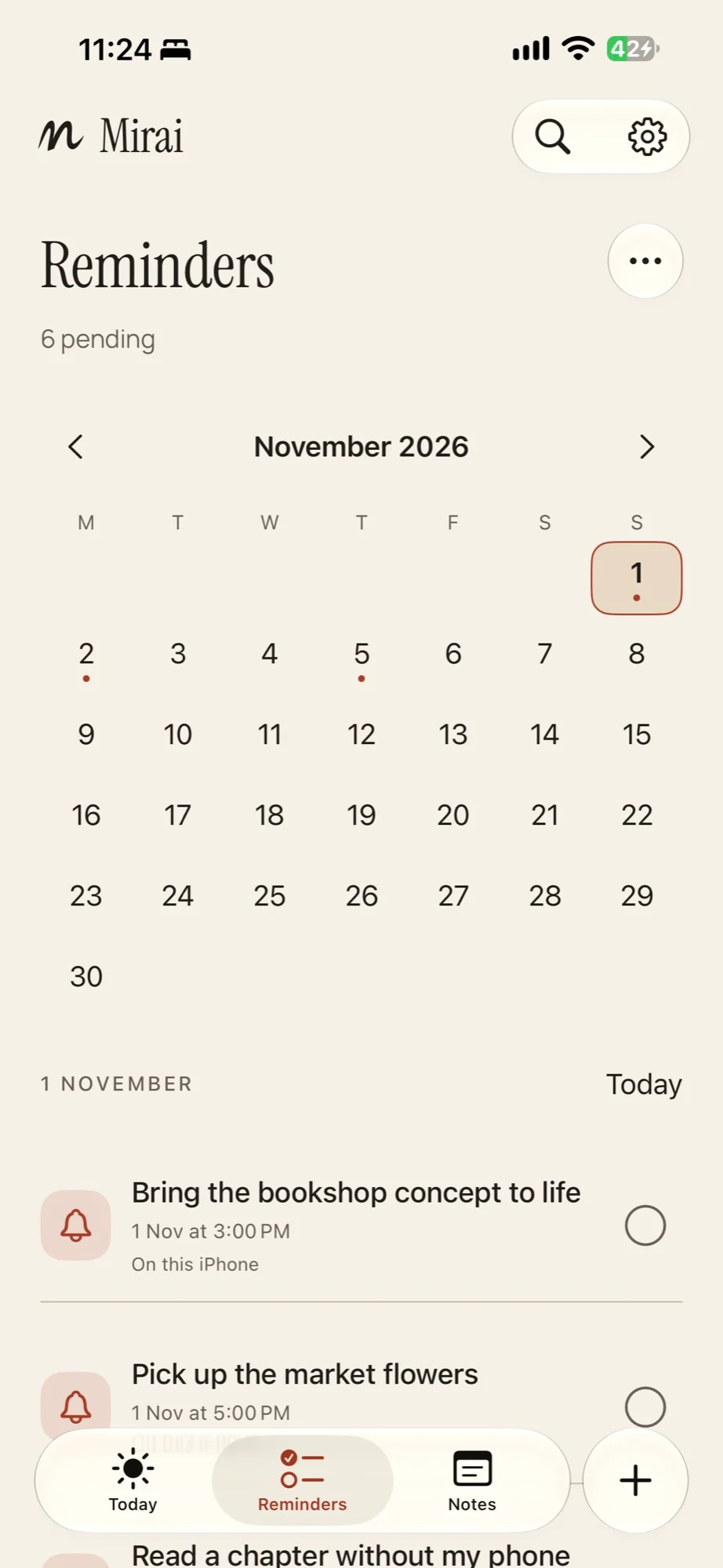
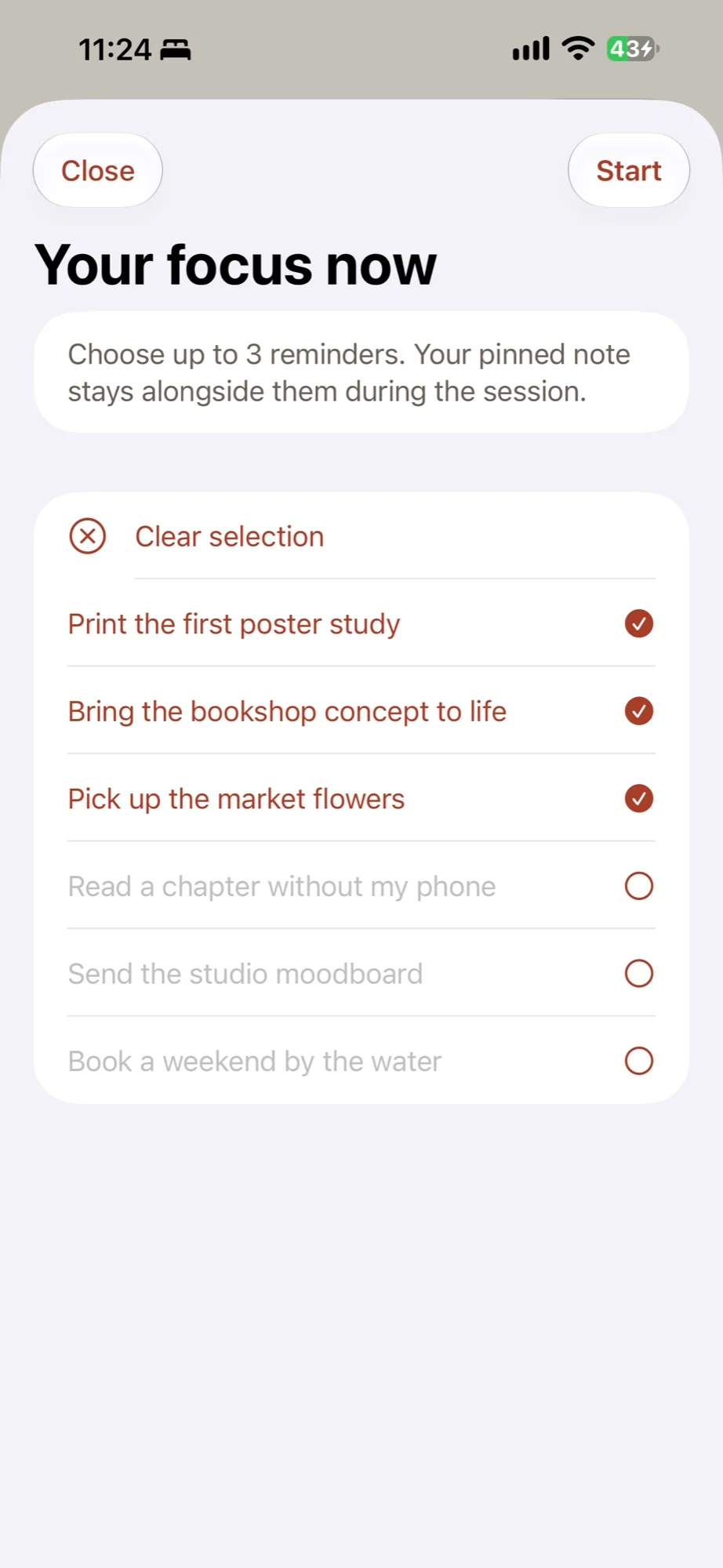
Today connects the creative material to a day. A calendar provides another route. Focus lets a person choose up to three reminders, rather than turning the whole library into an urgent list.
FROM IDEA TO IMPLEMENTATION
A suggestion is still a decision.
SwiftData stores the note, its checklist, collection and recoverable deletion state. Search looks across those representations. When on-device task understanding is available, the note can produce suggestions that remain subject to review.
An asynchronous result must also belong to the current draft. A request token and cancellation check prevent an older analysis from replacing a newer one. Only after review does a suggestion become a reminder. Local reminders and Apple Reminders have distinct storage paths; shared text is a copy rather than a promise of Apple Notes database synchronisation.
Catch
Put the thought somewhere before deciding what it is.
Keep
Let notes, checklists and collections give it shape.
Return
Find it through search, a day, a reminder or a focused session.
TASKUNDERSTANDINGSERVICE.SWIFT / IMPLEMENTATION EXCERPT
let token = UUID(); request = token
// After the on-device model returns:
guard !Task.isCancelled, request == token else { return }
suggestions = Self.validated(response.content.tasks, source: input)
The explanatory comment marks omitted lines. Model availability, task extraction and a person's approval are separate steps. The native review capture shows one task found in the example bookshop brief.
THE THOUGHT IN USE
Useful structure stays editable.
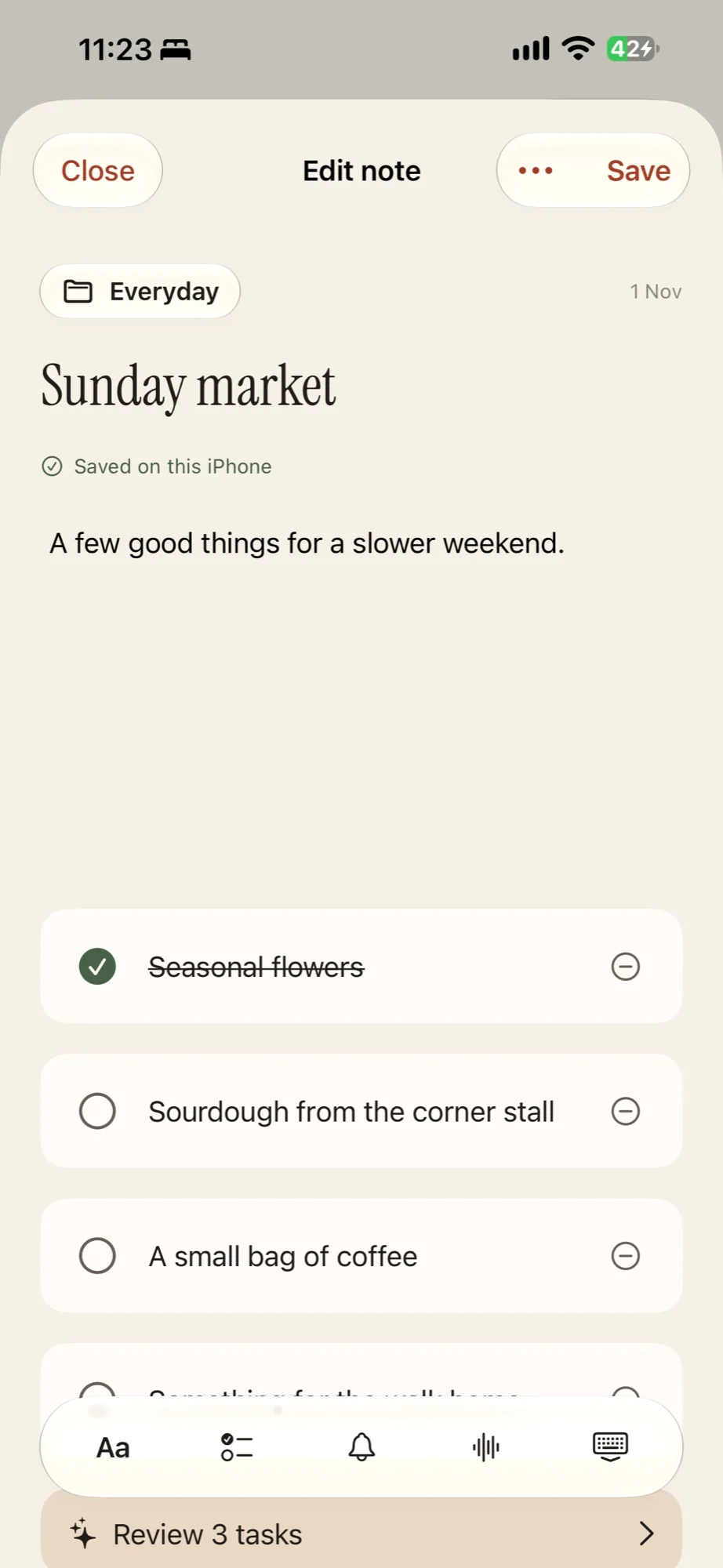
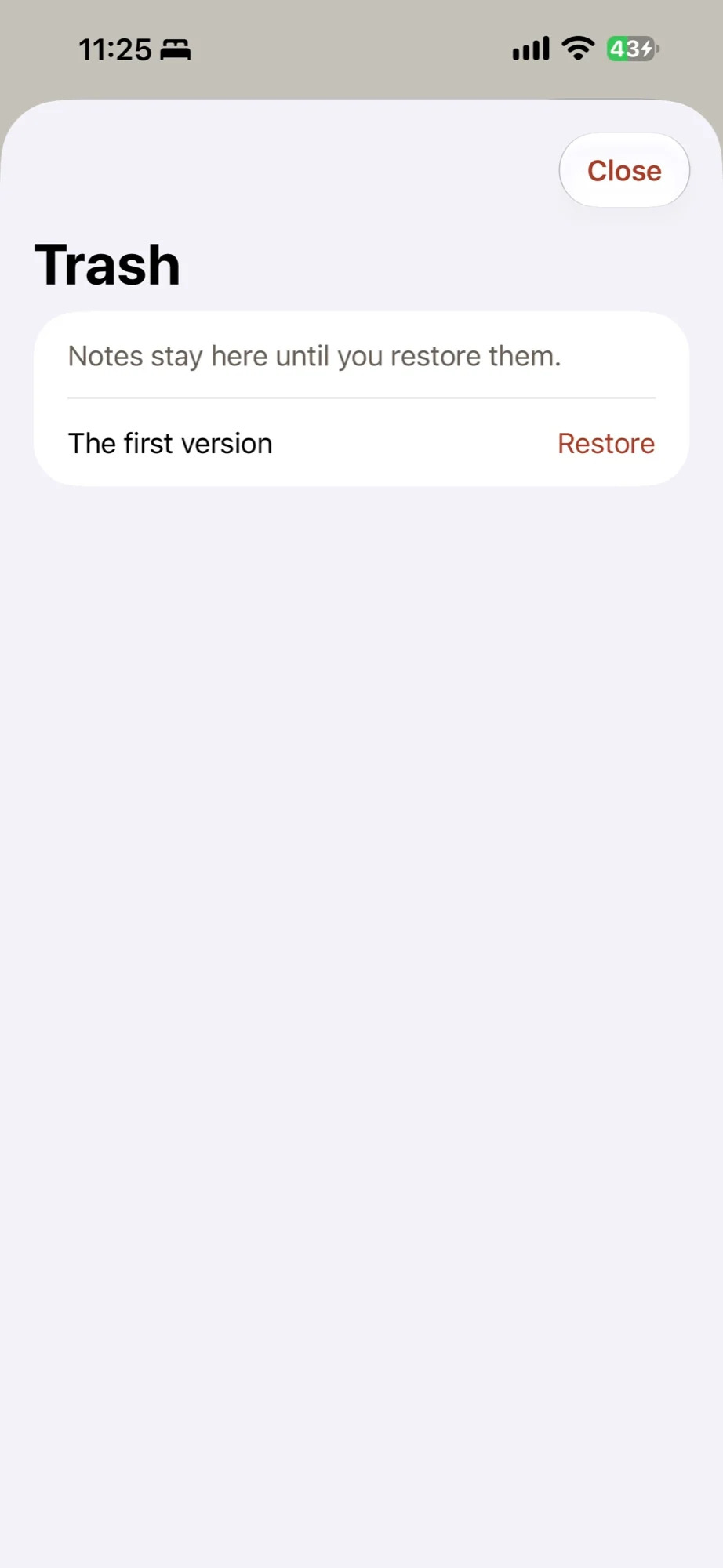
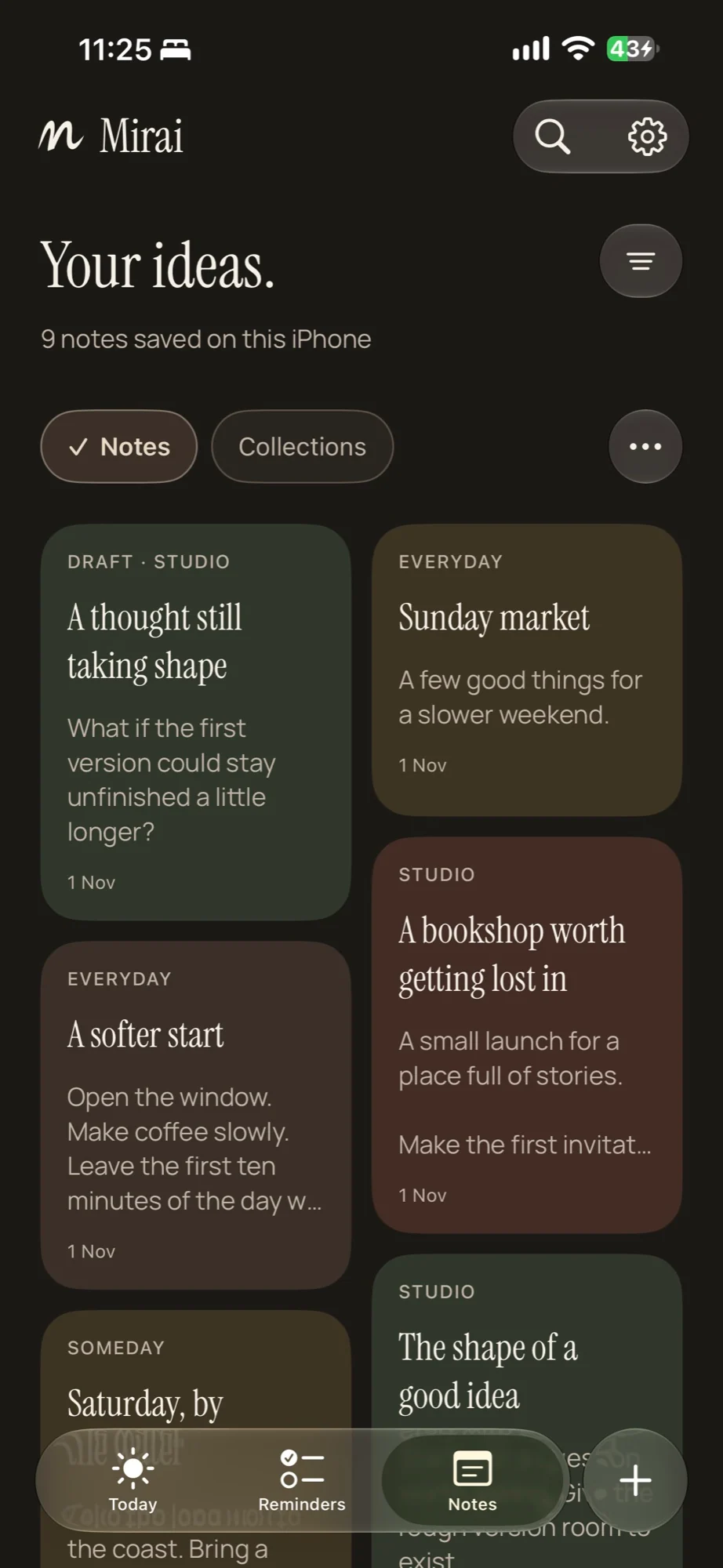
A checklist supports practical notes. Trash makes a change of mind recoverable. Dark appearance belongs to the same native product, with the same example library.
THE VISUAL LANGUAGE
The first stroke.
Mirai
The evolving brush-inspired m and mineral-red accent give Mirai a handmade character. Paper, sage and butter tones support an editorial palette. The personality comes from type, spacing, material and the content itself, while the controls retain the familiarity of an iPhone app.
Paper
#F5F1E9
Mineral red
#A34D3C
Sage
#CCD3BD
Butter
#EADD9E
Portfolio typography / Bricolage Grotesque + Instrument Sans. Handwritten accents / Permanent Marker. Original app typography is preserved inside each screenshot.
APPLICATION STUDIES
A little room
for unfinished thinking.
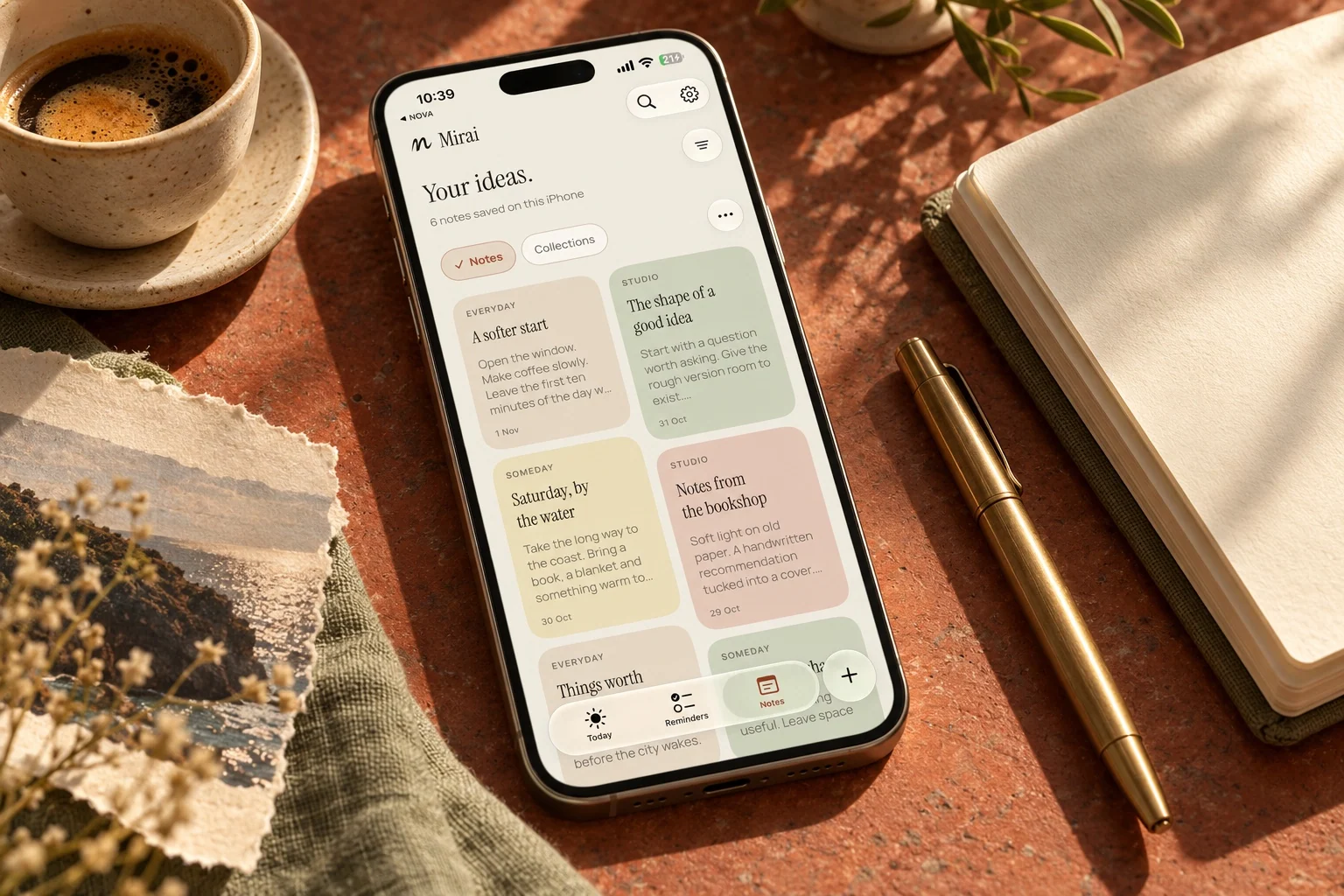
Mirai belongs to a daylight world of paper, mineral red, sage and creative work. The Scribe study beside Wellington's waterfront and the tactile desk composition have different jobs: one explores the idea, the other shows the implemented notes in use. The atmosphere stays human and unfinished enough to invite a first thought.
Before it becomes
something, keep
it somewhere.
Mirai
WHERE IT IS NOW
An idea can become an action
without losing its character.
The expanded example follows a small creative week: bookshop references become a brief, a suggested task is reviewed, and reminders sit beside everyday notes. It gives the interface a reason to exist beyond an attractive empty canvas.
The next evaluation is the whole return journey: whether someone can capture quickly, recognise the right note later and recover gracefully after changing their mind. Focus, calendars and automation earn their place when they support that journey.
The full screen atlas contains 25 physical iPhone captures: Today, notes, collections, a collection, writing, checklist, draft, search, quick capture, audio entry, reminder layouts and editing, task review, focus selection, trash, settings, widget guidance, onboarding and dark appearance. No personal notes or Apple Reminders library were used for this demonstration. Explore the full screen atlas ↗
EVIDENCE / Physical iPhone captures, 1–2 November 2026, using portfolio demonstration data. Fictional photographic people and scenes. Reconstructed primitive process studies. Product rationale and source excerpts are distinguished from the personal motivation Victor supplied for NOVA. No invented research participants, adoption metrics or outcome results.