
THE BEGINNING
I joined MFIT as a pioneer employee alongside the CEO. There was no product, no brand, no design system — just a hypothesis that Brazil's 690,000+ registered personal trainers needed a better way to run their business. Over 4 years, I owned the entire design function: research, brand, product, and growth.
How might we give personal trainers — who are experts in fitness but not in business — a single tool to manage, grow, and professionalise their practice?
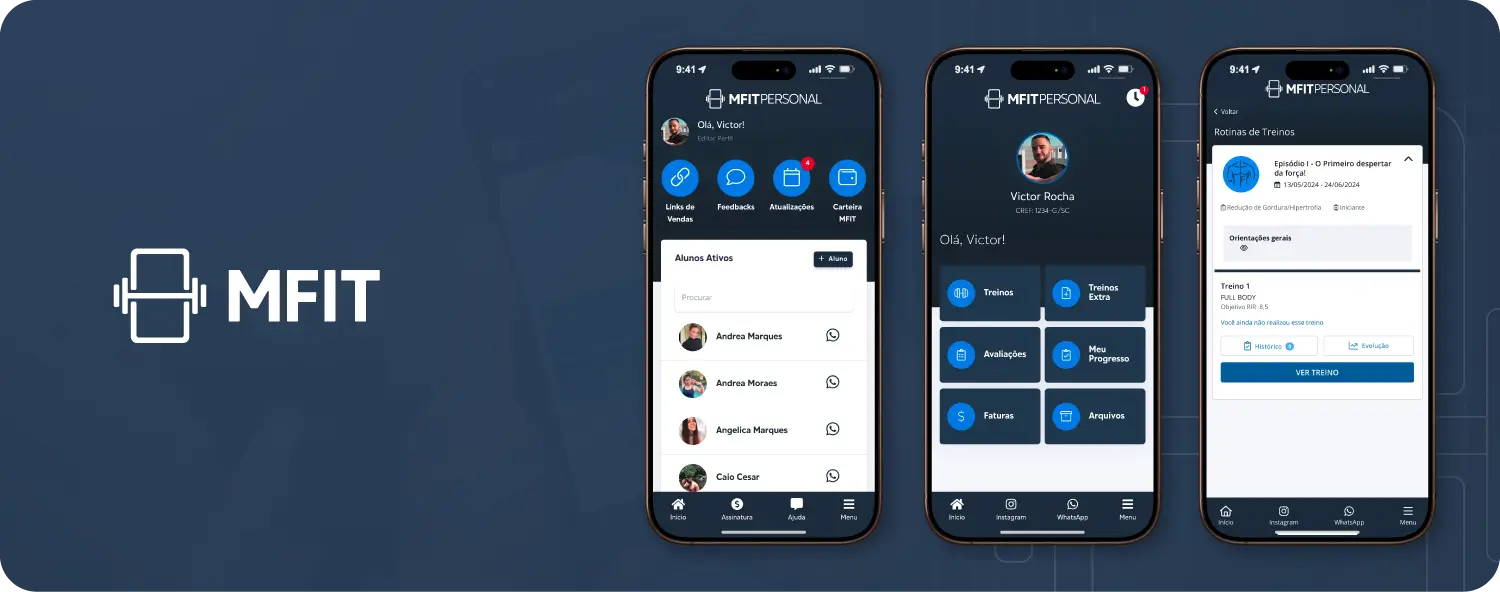
A complete SaaS platform redesign, brand overhaul, design system, and an educational sub-product — all informed by 7 months of proprietary user research and two months for implementation.
Research
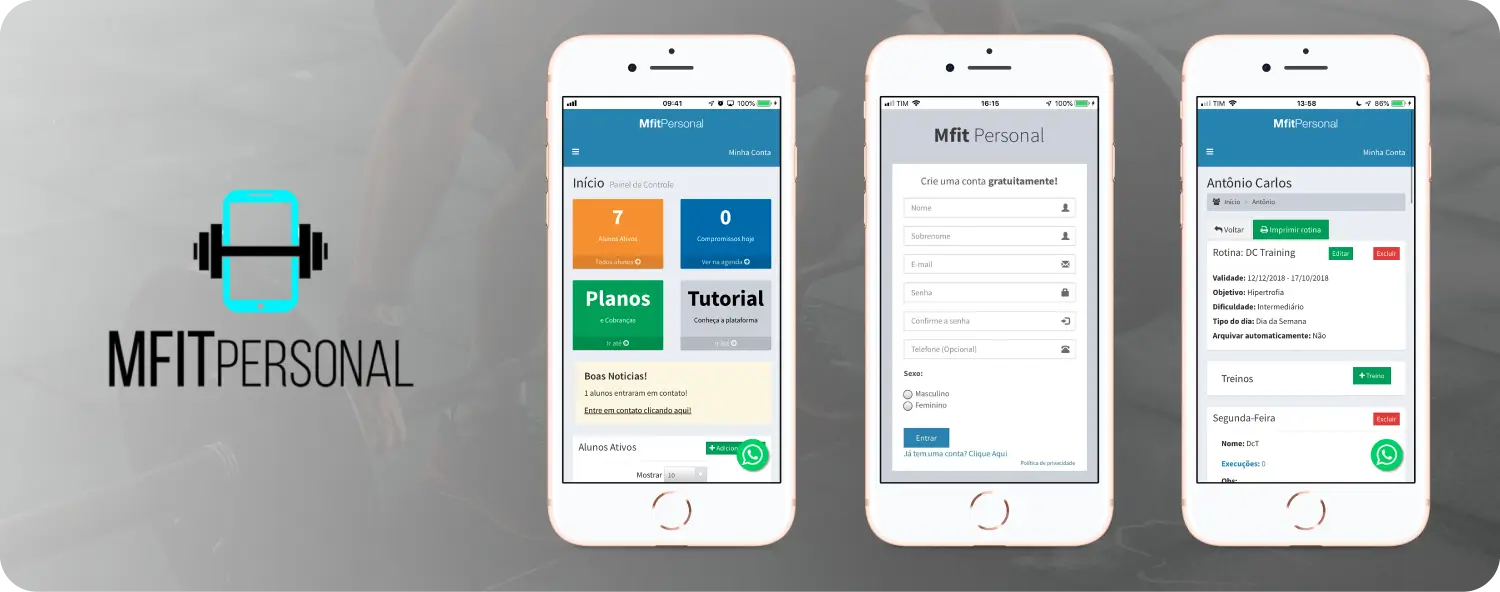
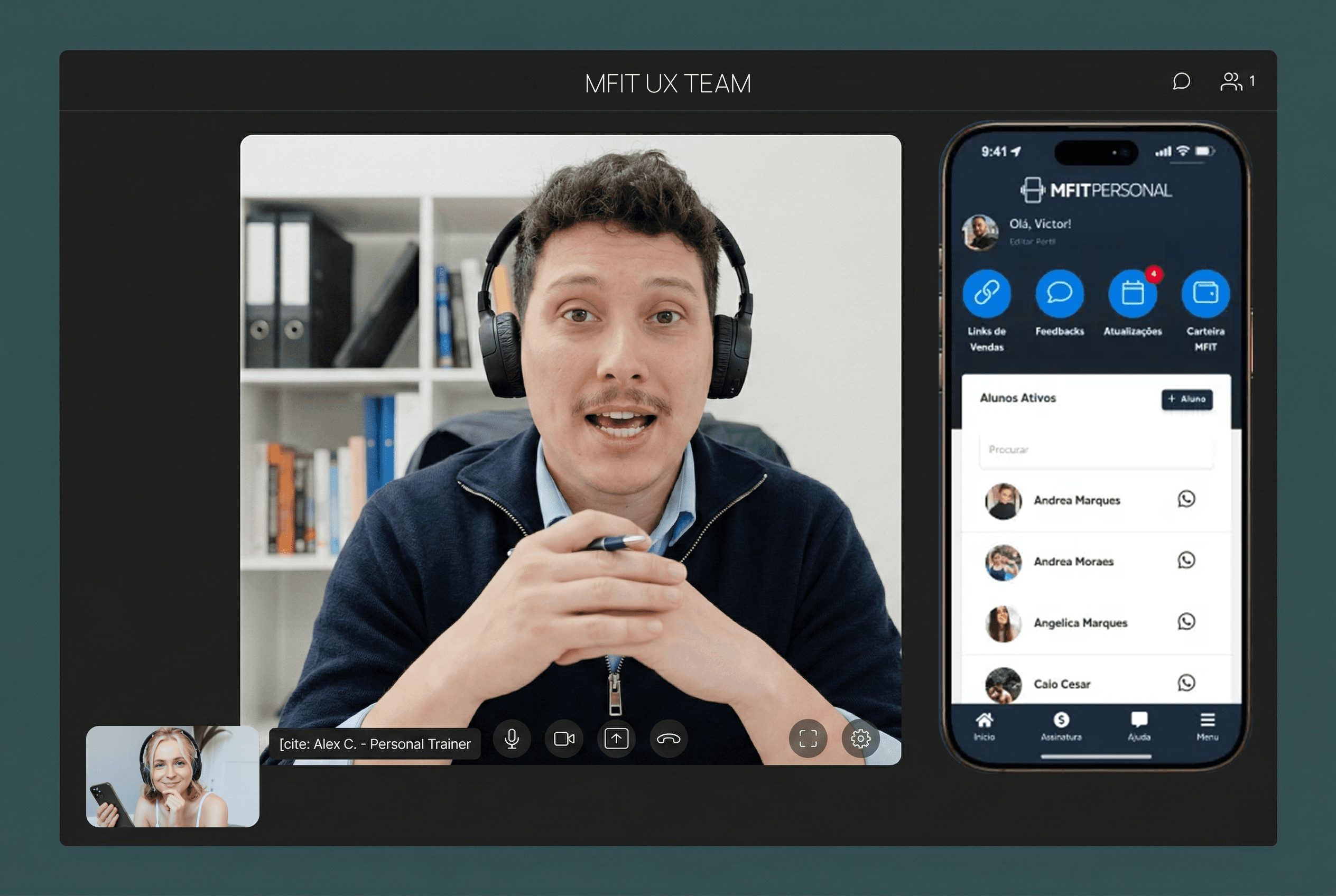
We ran interviews with personal trainers across Brazil — from independent freelancers in parks to gym-employed trainers managing 30+ clients. We complemented this with surveys, app analytics, usability testing, and a 7-month proprietary study I created called Eikon, which used Jungian archetypes and image association to map how trainers perceived the MFIT brand versus how they wanted to be perceived.
15+ direct interviews with PTs across different contexts
Surveys distributed to the active user base
App analytics tracking drop-off points and usage patterns
Eikon: 7-month brand perception study (published on Portal Administradores)
Ongoing feedback via Customer Success beta testing programme
The core action was harder than doing it by hand.
Prescribing a workout — the thing a trainer does every single day — took too many screens and too many inputs. Trainers abandoned the flow midway and went back to WhatsApp voice notes and PDFs.
The brand made trainers feel embarrassed, not empowered.
When PTs compared MFIT to competitors and to apps they admired, the identity felt dated and amateur. Some reported being reluctant to show the app to clients. The Eikon research confirmed this: there was a measurable gap between how trainers perceived MFIT and how they wanted their brand to feel.
Trainers were fitness experts, not business experts.
The overwhelming majority had zero marketing, sales, or branding knowledge. When asked how they attracted clients, the most common answer was "I don't." Over 70% had never taken any course on marketing or personal branding.
No single source of truth.
Before MFIT, most trainers managed their business across 4–5 disconnected tools — WhatsApp for communication, spreadsheets for scheduling, paper notebooks for assessments, bank transfers for payments. Client data was scattered and often lost.
First impressions were being wasted.
New users didn't understand the value proposition fast enough. Analytics showed a steep drop-off between account creation and the first meaningful action. Usability testing revealed that trainers didn't know where to start.
Simplified prescription flow
Reduced the workout creation process from a complex multi-screen form to a streamlined flow with templates, pre-loadable structures, and fewer required fields. The goal: make the most frequent action feel faster than the manual alternative.
Full rebrand via Eikon research
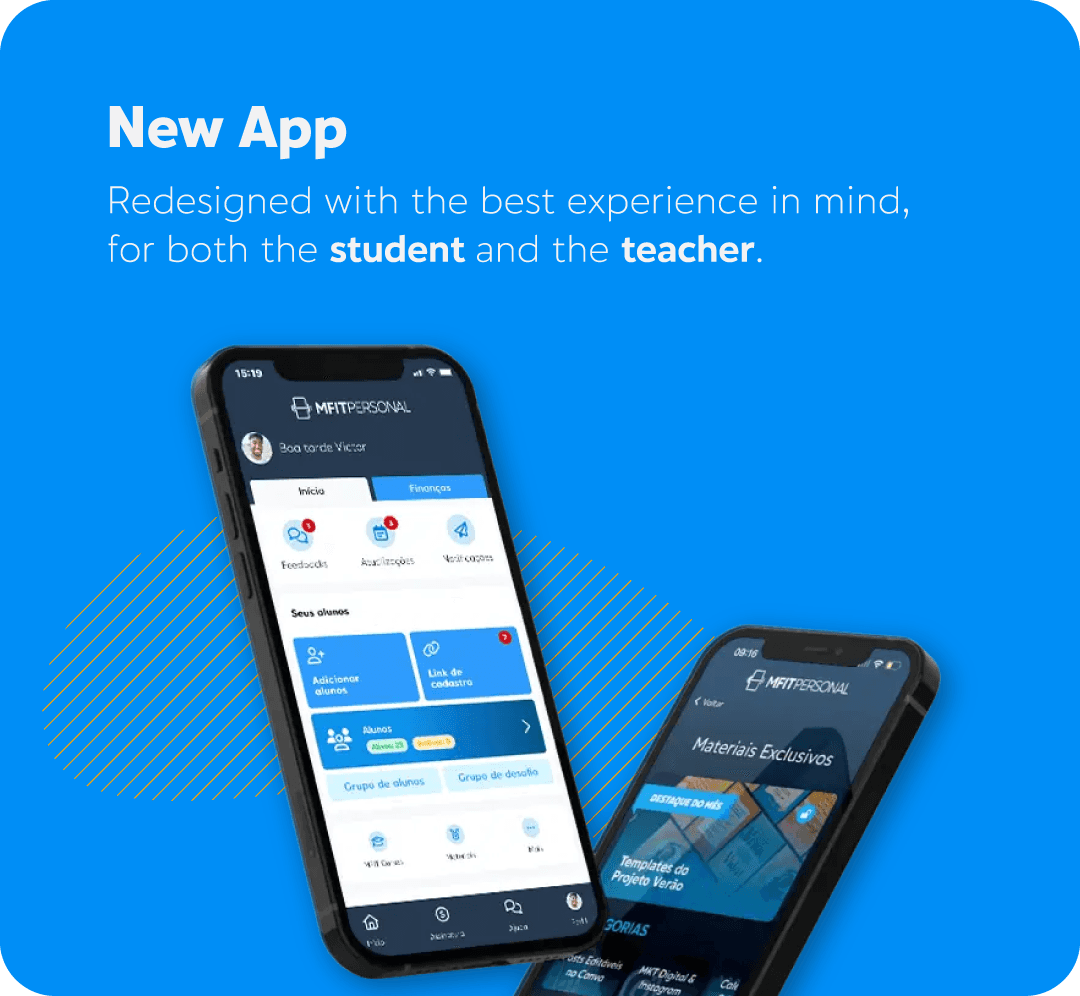
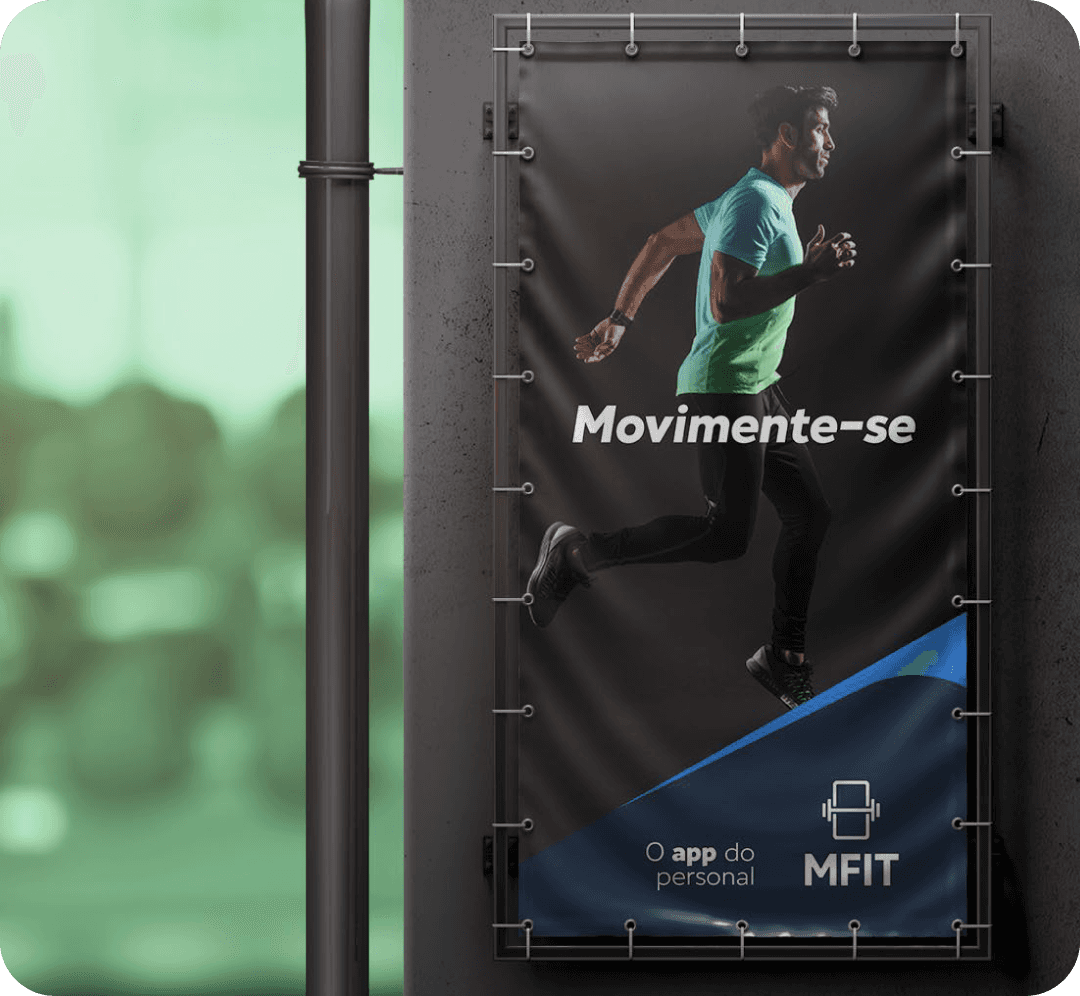
The 7-month Eikon study drove a complete visual overhaul — new logo (built with Golden Ratio), new colour system, new UI language. The brand was redesigned to reflect what trainers wanted to project: professionalism, trust, modernity.
Design system: "Movement"
Built from scratch — foundations (colour, typography, spacing), components (6 button variants x 3 sizes, form elements, cards), and patterns. Published on Figma Community. This became the backbone of consistency across web and mobile.
"Marketing para Personal"
I identified that trainers churning wasn't a product problem — it was a business education problem. I conceived, validated (name tested with users — "Marketing para Personal" beat "MFIT Academy" for clarity), and launched an educational platform inside MFIT with courses, e-books, and templates teaching PTs how to market themselves.
Integrated platform
Designed the unified experience: workout prescription, custom anamnesis builder (beyond standard PAR-Q), client management, integrated payments, scheduling — replacing the 4–5 fragmented tools trainers were juggling. Added CREF API integration for credential verification and LGPD-compliant data handling.
Redesigned onboarding
Progressive disclosure approach — guiding new trainers to their first workout prescription as the primary activation goal, with other features introduced contextually. A/B tested different paths to optimise for first-session retention.




OUTCOMES
450K+
Personal trainers on the platform

Reflection
This project shaped who I am as a designer. I learned that the best research doesn't always come from strategy meetings — some of the most important insights came from casual conversations with trainers who trusted us enough to be honest.
I learned that design systems aren't just about components — they're about giving a growing team a shared language. And I learned that sometimes the most impactful thing a designer can do isn't redesign a screen — it's identify a problem no one was talking about and build something entirely new to solve it.